

The Use of PLCs in Industrial Automation Systems

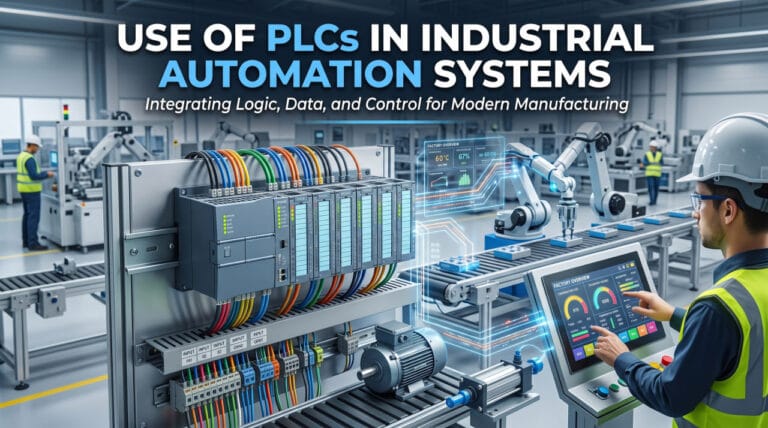
Modern manufacturing industries move by one absolute rule: fast, precise, and minimal downtime. To achieve this standard, factories can no longer rely on manual labor or outdated electrical systems utilizing thousands of relays. This is where the use of PLCs in industrial automation systems becomes the primary foundation.
A Programmable Logic Controller (PLC) is essentially an industrial computer. This machine receives data from sensors, processes logic instantly, and sends commands to actuators like motors or valves. Unlike standard computers, PLCs are specifically designed to withstand harsh factory environments resistant to extreme temperatures, machine vibrations, dust, and electromagnetic interference.
The Brain Behind Factory Scalability
Before the modern automation era, changing the production flow meant technicians had to dismantle and reconnect thousands of relay cables. This process took weeks. Now, programmable logic controller architecture allows technicians to change operational logic solely through software.
When factory engineers want to add new sensors or adjust conveyor speed limits, they only need to update the code within the program. This flexibility is what makes PLCs the absolute standard for factories wanting to implement industrial IoT (Internet of Things) concepts and Industry 4.0. The PLC acts as a bridge that retrieves physical data from the factory floor and sends it to a management dashboard in the cloud for factory efficiency analysis.
Accurate Synchronization on an Automotive Assembly Line
To understand the scale of its capabilities, look at PLC implementation in a global automotive factory assembly line, such as an electric vehicle production facility in Europe. In a single production line, there are dozens of robotic arms, moving conveyors, precision sensors, and scanning cameras. Everything must move in harmony with a zero-point-something millimeter fault tolerance. When a car chassis arrives at the welding station, a proximity sensor sends a signal to the PLC.
In a matter of milliseconds, the PLC processes that signal and issues a series of output commands:
- Stopping the conveyor motor precisely.
- Activating hydraulic clamps to lock the chassis.
- Sending a signal to the robotic arm to begin welding.
If the scanning camera detects the chassis position has shifted by 2 millimeters from the standard, the PLC will automatically stop the process and trigger a warning alarm before the robot damages the material. The speed and reliability of this logic processing are impossible for humans or conventional control systems to match. The result? The factory can produce hundreds of cars a day with a product defect rate approaching zero.
Challenges of Automation Adoption in Indonesia
Although this technology is highly crucial, industry players in Indonesia often face classic obstacles when adopting automation systems. The majority of PLC devices on the market are imported products from Europe, Japan, or America. This condition creates three main problems for local factories:
- High Investment Costs: Import taxes and long distribution chains make device prices skyrocket.
- Long Lead Times: Procuring spare parts can take months. If a machine breaks down, the factory must halt production while waiting for components to arrive from abroad.
- Limited Technical Support: It is rare for foreign principals to provide a local engineering team that can come directly to the factory during critical troubleshooting events.
Many factories in Indonesia end up postponing modernization due to fears of operational risks and uncontrollable maintenance costs.
Folks Automation: The First Local PLC Solution in Indonesia
To address this infrastructure gap, the market needs a local player who understands field conditions. This is why Folks Automation exists. As the first locally made PLC company in Indonesia, Folks Automation is overhauling the way factories in the country build their industrial control systems.
Folks Automation produces PLCs that confidently compete in quality with global brands, but with a much friendlier ecosystem for the domestic industry. Because they are produced locally, the supply chain is extremely short. Factories no longer need to wait weeks to get additional modules or replacement spare parts.
Folks Automation understands that manufacturing automation is about integration. The Folks Automation engineering team acts as a strategic partner ready to design an automation architecture according to your factory’s unique specifications—ranging from food packaging automation to large-scale industrial water pump management.
Automation Consultation for Your Factory Needs
Every production line has unique challenges. You do not have to guess which logic module specifications or communication protocols are most appropriate for your factory. Plan your automation system transition with accurate data and analysis. If your factory is planning to increase efficiency, rejuvenate old control systems, or needs industrial IoT implementation guidance, Folks Automation is ready to assist you from the design stage to execution (Journey Consultation).
Discuss the technical issues and the need for PLC usage in industrial automation systems at your facility directly. Contact the Folks Automation expert team now via WhatsApp at +6282114044968 to start a no-compromise technical consultation.